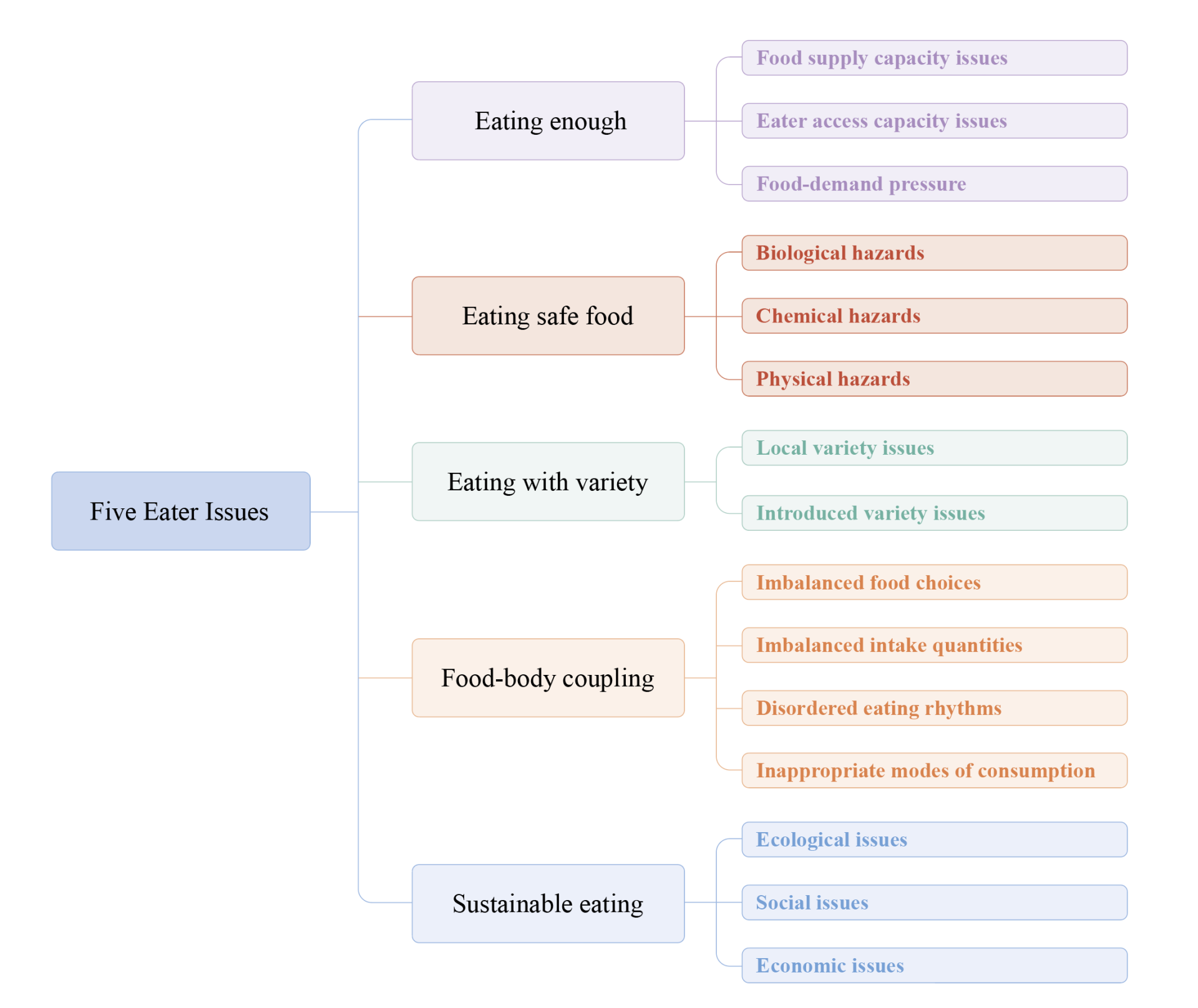
Human Shiance Issue System—— “Five Eater Issues”
To better understand the human shiance issues, we have established the “Five Eater Issues” system. Level 1 is the overarching human shiance issue, which encompasses all need gaps. Level 2 comprises five categories of issues threatening eating enough, eating safe food, eating with diversity, food-body coupling, and sustainable eating . Level 3 comprises 15 domains under the five categories and answers, “In which respect does the issue occur?”
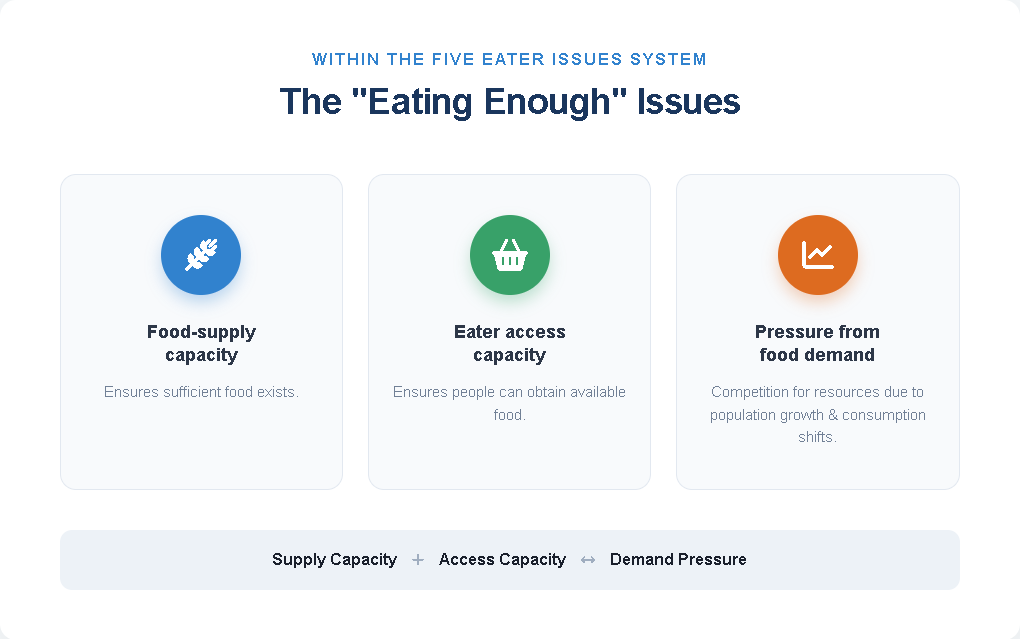
Within the five eater issues system, the eating enough issues comprise three Level 3 issues: food-supply capacity, eater access capacity, and pressure from food demand. First, food-supply capacity determines whether sufficient food exists. Second, eater access capacity determines whether people can obtain available food. Third, pressure from food demand reflects competition for limited food resources created by population growth, urbanization, feed demand, non-food uses, and changing consumption patterns.
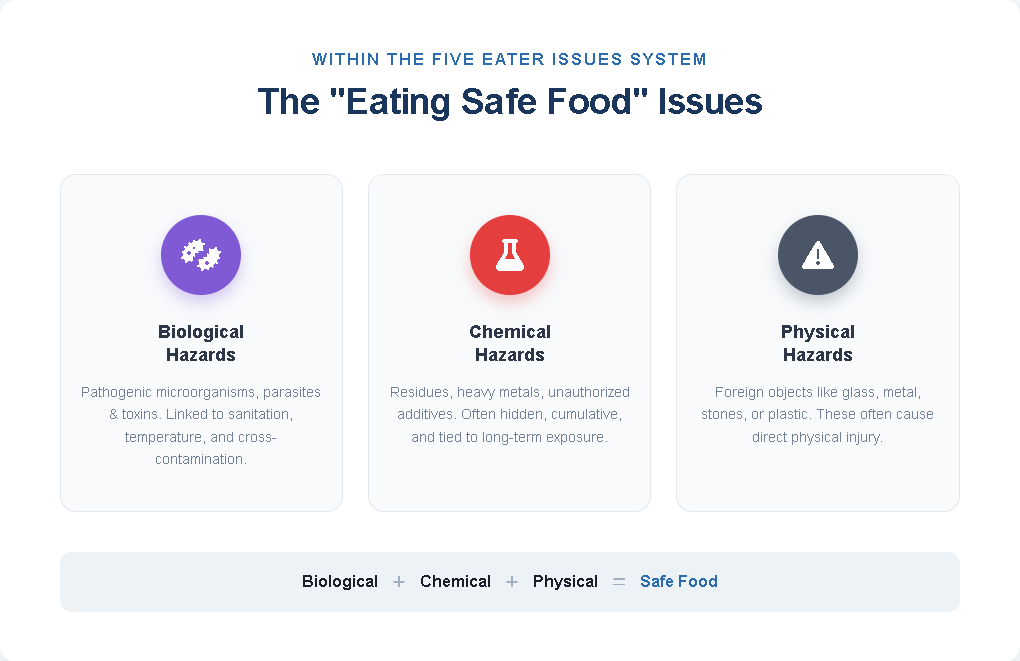
The eating safe food issues comprise three Level 3 issues: biological, chemical, and physical hazards. Biological hazards include pathogenic microorganisms, parasites, and related toxins and are often associated with sanitation, temperature control, and cross-contamination. Chemical hazards include pesticide and veterinary-drug residues, heavy metals, environmental contaminants, unauthorized additives, and harmful substances formed during processing or storage; they may be hidden, cumulative, and associated with long-term exposure. Physical hazards include foreign objects such as glass, metal, stones, and plastic and often cause direct injury.
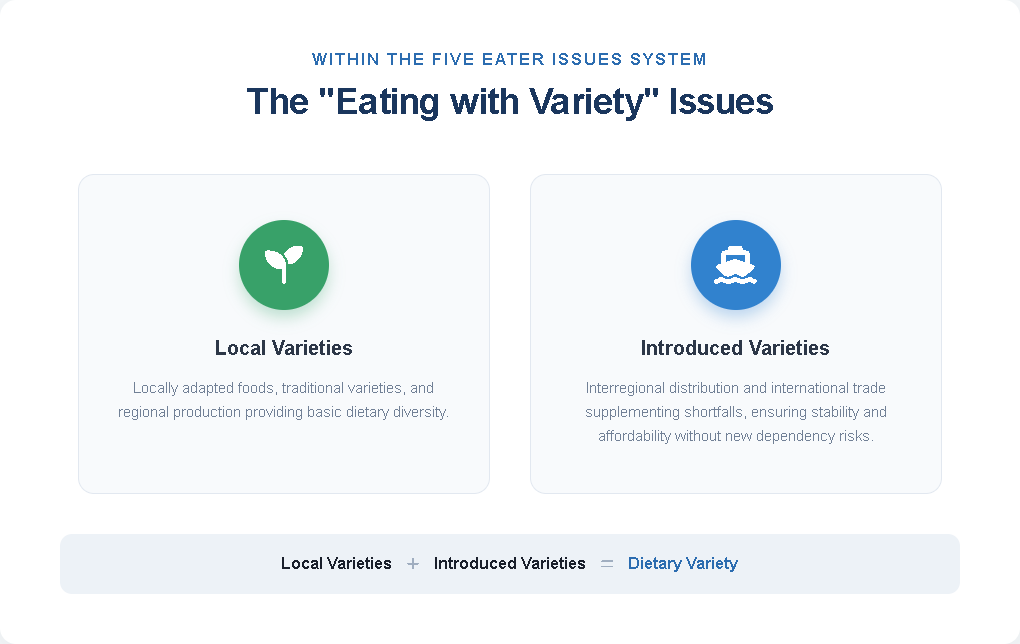
The eating with variety issues comprise two Level 3 issues: issues concerning local varieties and introduced varieties. The former examine whether locally adapted foods, traditional varieties, and regional production can provide basic diversity. The latter examine whether supplies used to supplement local shortfalls through interregional distribution and international trade are stable, affordable, and free from new dependency risks.
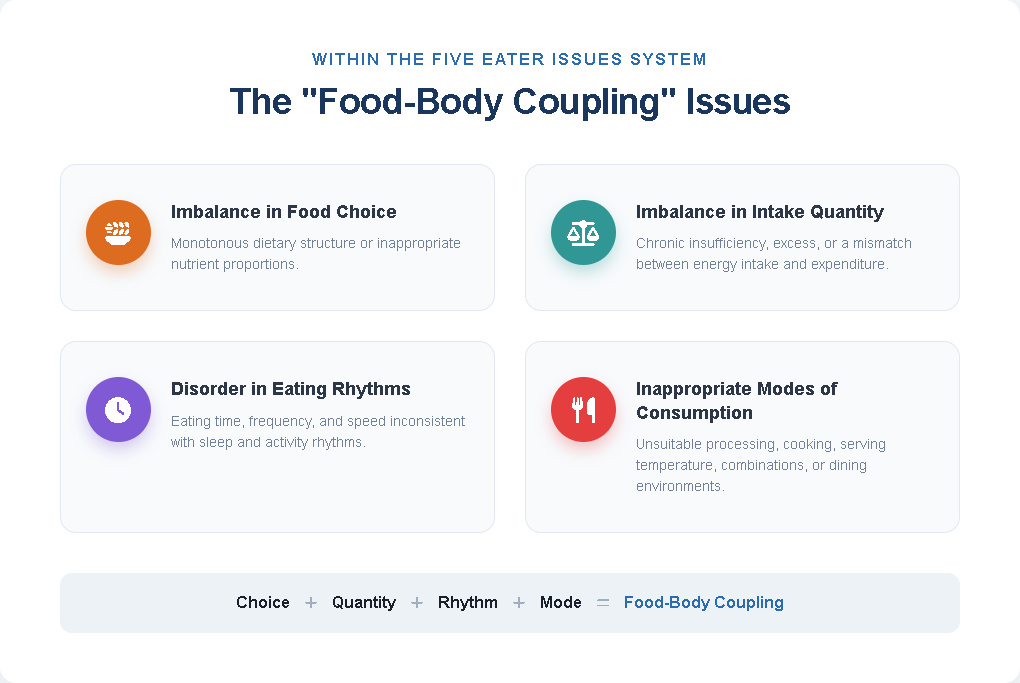
The food-body coupling issues comprise four Level 3 issues: imbalance in food choice, imbalance in intake quantity, disorder in eating rhythms, and inappropriate modes of consumption. Imbalance in food choice appears as a monotonous dietary structure or inappropriate nutrient proportions. Imbalance in intake quantity appears as chronic insufficiency, excess, or a mismatch between energy intake and expenditure. Disorder in eating rhythms appears when eating time, frequency, and speed are inconsistent with sleep and activity rhythms. Inappropriate modes of consumption include unsuitable processing and cooking, serving temperature and degree of doneness, combinations and sequence, allergy management, or dining environments.
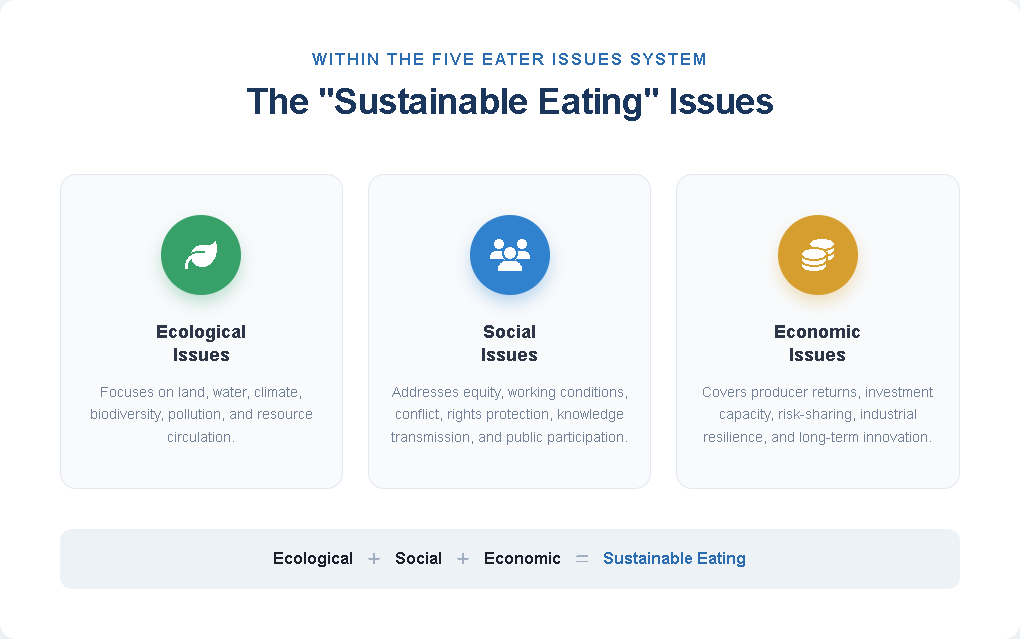
The sustainable eating issues comprise three Level 3 issues: ecological, social, and economic issues. Ecological issues concern land, water, climate, biodiversity, pollution, and resource circulation. Social issues concern equity, working conditions, conflict, protection of rights, knowledge transmission, and public participation. Economic issues concern producer returns, investment capacity, risk-sharing, industrial resilience, and long-term innovation.