
We live in an unprecedented era. The world's eight billion people are spread across continents, with different skin colors, beliefs, and cultures, yet we share the same most fundamental human need—food.
"Eating" has long gone beyond merely satisfying hunger. From ancient hunting to modern agriculture, from fear of famine to concerns over overnutrition, human dietary needs have continually evolved and stratified.
Liu Guangwei, Chairman of the World Shiology Forum and Director of the Shiology Research Center at Renmin University of China, proposes the theory of the "Five Eater Needs", which divides human food-related needs into five levels: sufficiency, safety, diversity, longevity, and sustainability.
From the perspective of food:
From the human perspective:
Together, these "Five Eater Needs" form a complete map of modern dietary civilization and point directly to the five major challenges we face today.
This is the most basic and urgent need, centered on food quantity—whether people can obtain enough food to sustain life and basic activity.
Although global agricultural productivity has greatly increased, regional conflicts, climate anomalies, and economic inequality continue to challenge the global goal of Zero Hunger. Ensuring that every person is free from hunger remains the first test of human civilization.
Once quantity is secured, we inevitably demand safe and reliable food quality. Food should be free from harmful physical, chemical, or biological contaminants, such as heavy metals, pesticide residues, and pathogens.
From farm to table and ultimately to the human body, every step of the chain defends this non-negotiable health boundary. Food safety crises directly undermine public trust in modern food supply systems.
After having enough food and safe food, people seek variety. This is not merely a matter of culinary enjoyment but also a prerequisite for balanced nutrition.
From staple grains to fruits and vegetables, diversified diets enable more complete micronutrient intake. Yet biodiversity loss and increasingly uniform dietary patterns are quietly eroding this “right to diversity.”
This represents a crucial elevation of dietary needs. Its core lies in the highly individualized relationship between food and the body. Human beings are not standardized products; each person's genes, metabolism, gut microbiota, and lifestyle differ.
Therefore, the goal is not a single population average but an individualized optimum. Only by adapting diet to individual differences can people eat scientifically and reasonably, approaching the ideal of a long and healthy life.
This is the highest dimension and the ultimate challenge—essentially an ecological question:
Can our current way of eating be sustained for future generations?
Food sustainability requires that food systems operate within a healthy ecological environment so that both present and future generations can continuously obtain sufficient and nutritious food. It raises critical concerns:
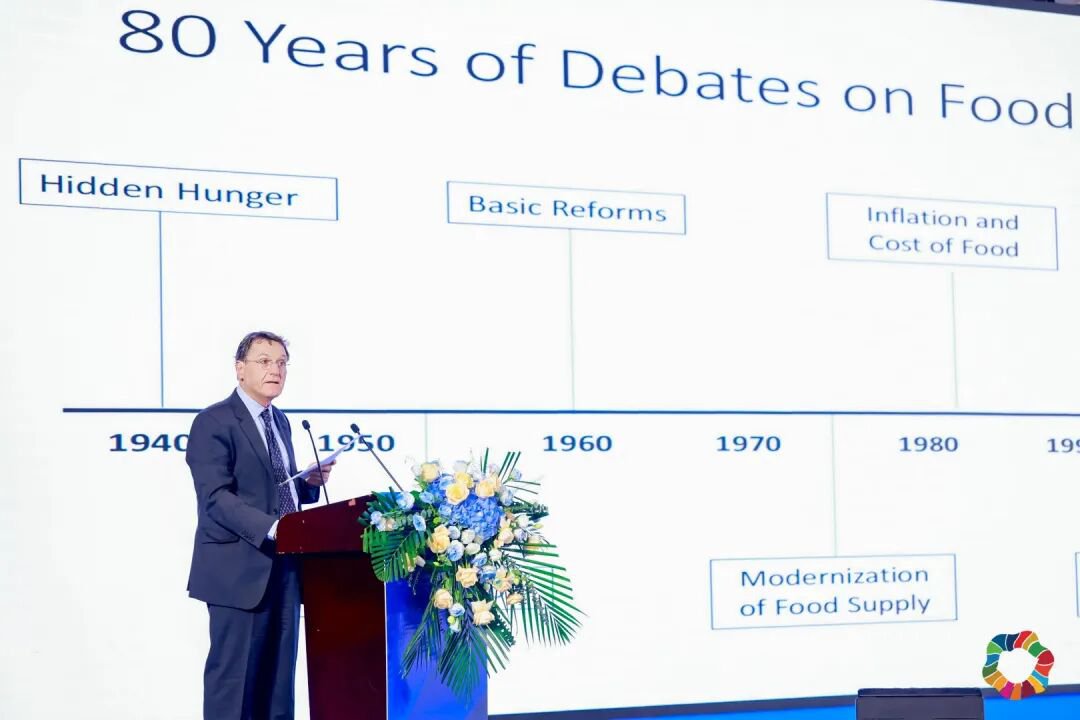
At the Fifth World Shiology Forum, Walter Belik, Deputy Director-General of Brazil's Zero Hunger Institute, highlighted the problem of the modern food system's "triple homogenization."
This "triple homogenization" significantly constrains the fulfillment of the "Five Eater Needs".
Everyone possesses these five needs. They are not separate stages but an interconnected whole. Without sustainability, sufficiency cannot last; without safety, longevity cannot be ensured.
The challenges associated with the Five Eater Needs are complex, persistent, and systemic, requiring global governance. A deep understanding of these five dimensions—from sufficiency and safety to diversity, longevity, and sustainability—offers a fundamental pathway toward building a resilient, equitable, and sustainable global food system.
Contact Person: Mr Zhang E-mail: Secretariat@shiology.world