
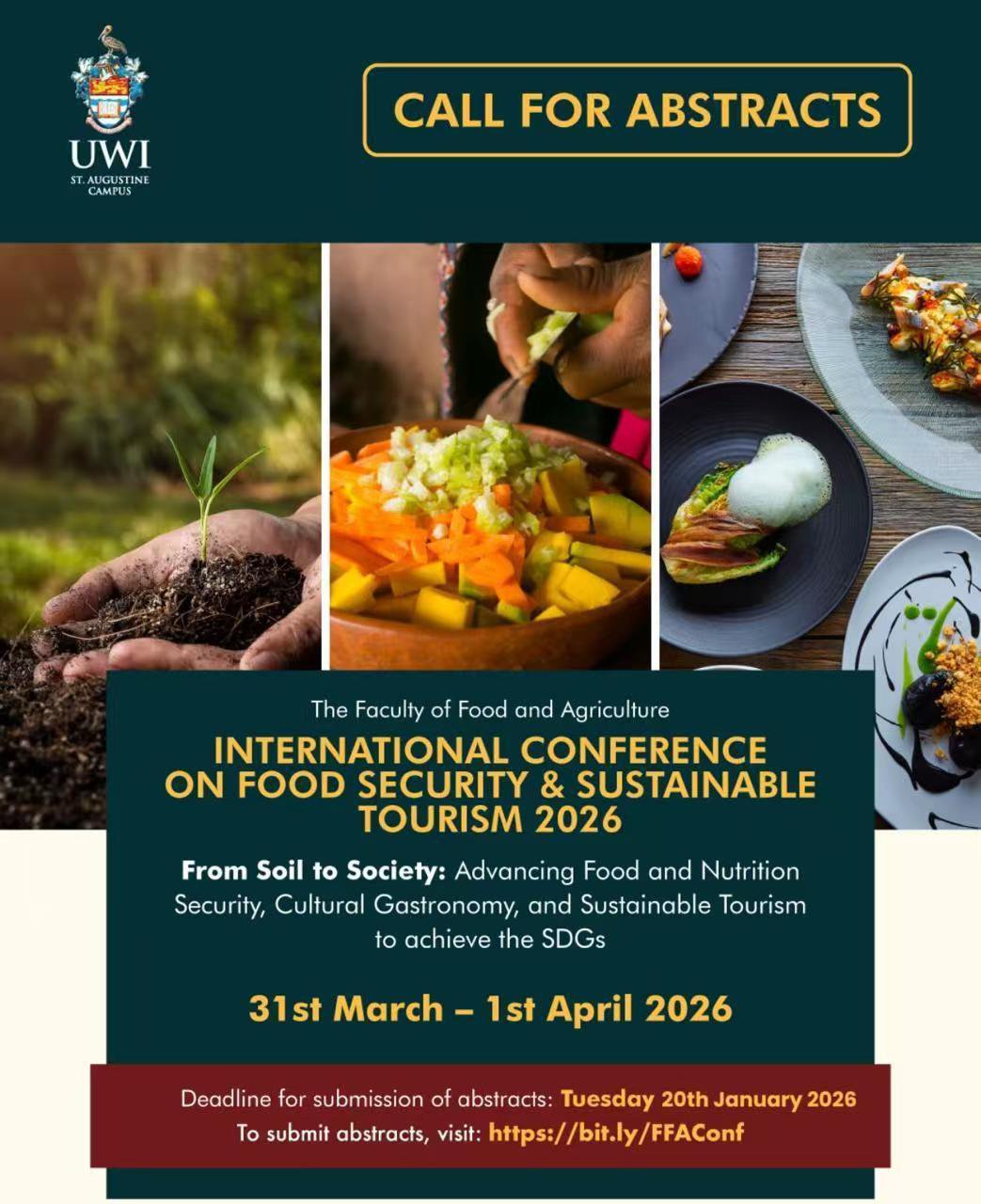
From March 31 to April 1, 2026, the International Conference on Food Security & Sustainable Tourism 2026 was held at The University of the West Indies, St. Augustine campus, in Trinidad and Tobago. This two-day conference, hosted by the university’s Faculty of Food and Agriculture, focused on the theme, "From Soil to Society: Advancing Food and Nutrition Security, Cultural Gastronomy, and Sustainable Tourism to Achieve the Sustainable Development Goals." The conference covered a wide range of topics, including cultivating continuity, soil health, innovation & entrepreneurship, food travel & identity, sustainable gastronomy tourism, and climate change resilience. Experts from around the world in soil science, agriculture, nutrition, tourism, sustainable development, and community development came together to engage in in-depth discussions. They explored the crucial roles of soil health, food systems, cultural heritage, and sustainable tourism in achieving the United Nations' Sustainable Development Goals. Attendees had opportunities for professional exchange and resource networking, exploring new ideas for the innovative development of sustainable agriculture and tourism.
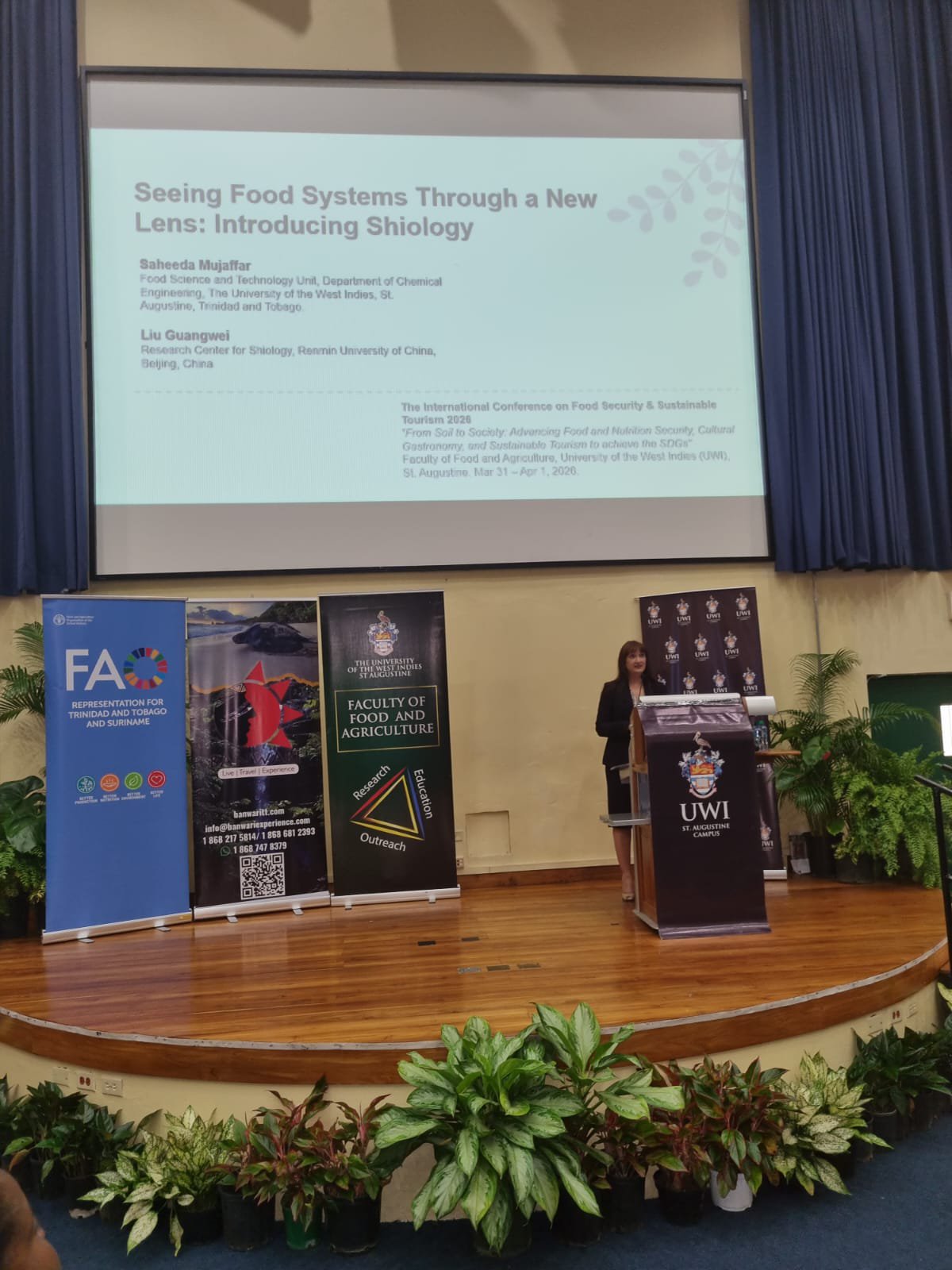
A highlight of the conference was Dr. Saheeda Mujaffar, an expert in food science and technology from the Department of Chemical Engineering at The University of the West Indies, who delivered a keynote on "Seeing Food Systems Through a New Lens: Introducing Shiology". Dr. Mujaffar introduced the concept of Shiology, a theory developed by Liu Guangwei of the Shiology Research Center at Renmin University of China, which offers an original Chinese perspective for global food security and nutrition governance. Her speech resonated deeply with the audience.
Dr. Mujaffar addressed the paradox at the heart of the global food system: while food production is at an all-time high, 733 million people remain malnourished, and 3 billion people cannot afford healthy diets. This is coupled with high food waste and a rise in diet-related non-communicable diseases. She pointed out that the root of the problem is not in production inefficiency but in the current system’s focus on "efficiency," which neglects the real needs of "eaters" as the ultimate consumers of food. Eating is not just about nutrition; it involves dignity, cultural significance, and pleasure—dimensions often overlooked by traditional food system research and design.
Dr. Mujaffar elaborated on the core principles and framework of Shiology, an interdisciplinary system derived from the Chinese concept of "Shi" (food). At its heart, Shiology focuses on the eater, shifting the perspective from production to the eater’s experience and needs. The framework’s core element, the "Shiology Triangle," includes three interconnected dimensions: the eater, food acquisition, and food order, each focusing on individual dietary needs, the full food supply chain, and system governance and operational mechanisms. These three elements are interdependent, providing clear support for building comprehensive food system solutions.
Dr. Mujaffar also emphasized Shiology’s global recognition: former UN Secretary-General Ban Ki-moon praised it as a key framework for integrating the eater, food, and system in the "Global Food Systems and SDGs Report (2025)." UN Secretary-General António Guterres also highlighted its guiding principles for global food governance in his speech at the 5th World Shiology Forum.
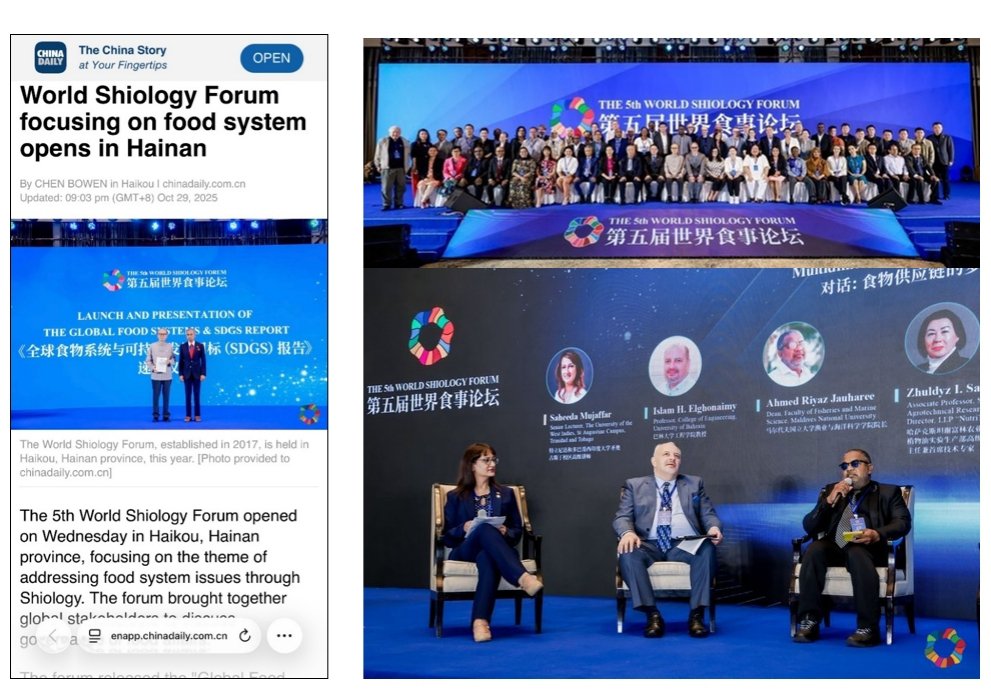
With respect to the conference's sustainable tourism theme, Dr. Mujaffar explored the practical value of Shiology: the differences in dietary needs between tourists and local residents often highlight contradictions in food supply, local ingredient use, and cultural authenticity. Shiology’s eater-centered perspective can precisely identify system mismatches, offering targeted ideas for the coordinated development of food systems and sustainable tourism. On the policy front, this perspective encourages a shift from "results-oriented" policies to "eater-demand-oriented" policies, emphasizing collaboration across sectors such as agriculture, health, and urban planning, ensuring that food systems truly meet the actual dietary conditions of the population.
The introduction of Shiology at this international conference is a significant demonstration of China’s contribution to global food system governance. Dr. Mujaffar and Mr. Liu Guangwei hope that by promoting Shiology worldwide, food systems will transition from a "system-centered" approach to an "eater-centered" one, making them more aligned with the real needs of people. Experts at the conference generally agreed that Shiology’s combination of food’s nutritional, cultural, and experiential attributes provides a new perspective for global sustainable food system research and practice. This approach is expected to lead to a new phase of thought in global food security and nutrition health, with a more holistic and humanistic focus.
Contact Person: Mr Zhang E-mail: Secretariat@shiology.world