
Shiance refer to the actions and activities that humans engage in to obtain and utilize food for survival and health. These include basic survival and health activities such as drinking and eating, as well as the cultivation, farming, cooking, and fermentation of food. Furthermore, it encompasses the legal, economic, administrative, and educational aspects involved in maintaining food systems. Shiance is the foundation of human survival, the cornerstone of civilization's continuity, and a critical issue in global governance.
To deeply implement the spirit of the speech delivered by UN Secretary-General António Guterres at the Fourth World Shiology Forum, the Global Food Systems and SDGs Report (hereafter referred to as the Report) was compiled in 2025 with the collaboration of experts from 115 countries worldwide. The report was officially released in October at the Fifth World Shiology Forum.
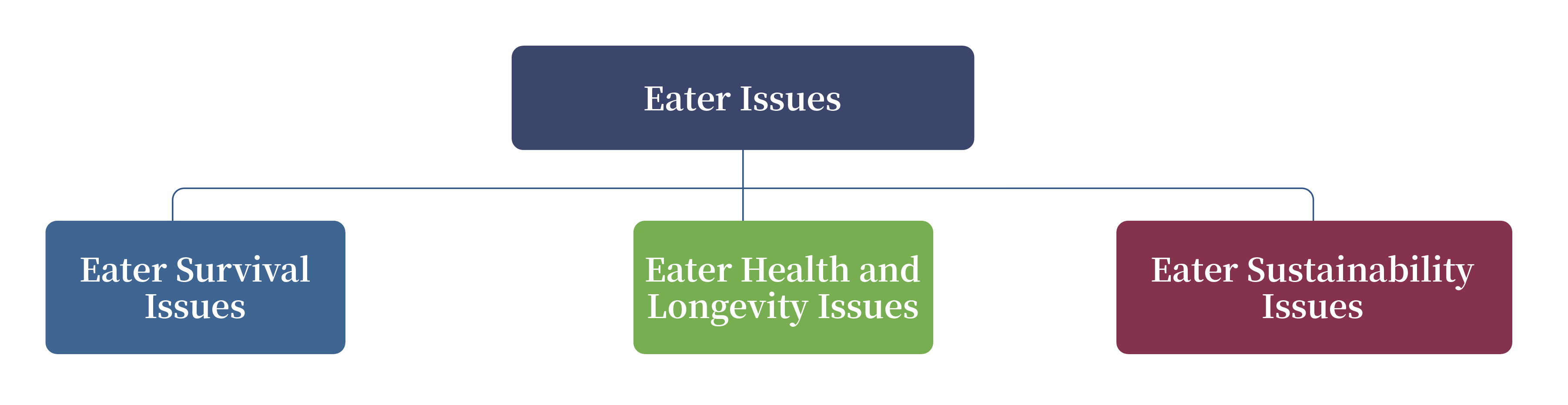
The 2025 edition of the Report, grounded in the theory of Shiology, focuses on a global overview of food issues. It systematically reviews 89 food-related issues across 195 countries. The report introduces an innovative "Three Eater Needs" framework, categorizing food issues into three major dimensions: the survival issues, the health and longevity issues, and the sustainability issues. This framework, centered around the needs of eaters, lays the foundation for understanding global food issues, clarifying the core demands humans have for food, and providing an initial theoretical guide for global food governance.
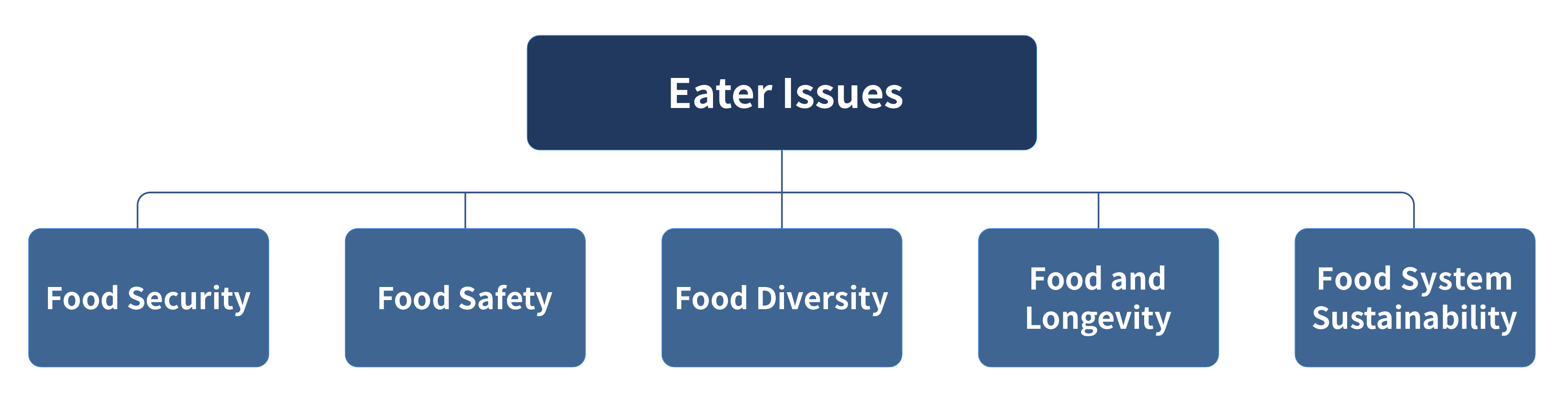
The compilation of the 2026 edition of the Report has now been officially launched. Compared with the previous edition, this year's Report centers on the construction of a Food Issues Index, further deepening its theoretical framework. The secondary-level food issue framework has been expanded from the "Three Eater Needs" model to the "Five Eater Needs" model, defining five core dimensions: food security, food safety, food diversity, food and longevity, and food system sustainability. This expansion represents a more precise and concrete understanding of human food-related needs.
The essence of food security lies in the quantity of food; the essence of food safety lies in food quality; the essence of food diversity lies in food variety; the essence of food and longevity lies in the degree of "body-food coupling" and the essence of food system sustainability lies in social order and ecological balance.
Both the "Three Eater Needs" and "Five Eater Needs" frameworks are eater-centered analytical systems that serve as the secondary-level structure for analyzing food-related issues. The transition from the "Three Eater Needs" framework to the "Five Eater Needs" framework represents an upgrade in three fundamental aspects:
First, the understanding of human food-related issues has evolved from the broad macro-level categorization of the "Three Eater Needs" framework toward a more detailed and refined multidimensional analysis.
Second, the definition of food-related issues has become more precise, better reflecting the realities of different countries and diverse population groups.
Third, while the framework has become more detailed, it has also enhanced both theoretical comprehension and practical applicability, enabling more targeted analysis and action in global governance.
The transition from the "Three Eater Needs" framework to the "Five Eater Needs" framework may appear, at first glance, to be simply an increase in number and an expansion of dimensions. In reality, however, it reflects a profound insight into humanity's food-related challenges and stands as a vivid testament to the continuous maturation of food governance theory. This transformation signals that global food development is moving toward a future that is more precise, more coordinated, and more sustainable, injecting new momentum into efforts to overcome global food-related challenges and safeguard the shared food wellbeing of the world's 8 billion people.

Food-related issues have never been the concern of a single country or a single sector alone. They are global challenges that affect the common wellbeing of all humanity. No nation can remain isolated from these issues or address them independently. Instead, countries around the world must build consensus, strengthen cooperation, and work together to confront the full range of food-related challenges facing humanity.
Contact Person: Mr Zhang E-mail: Secretariat@shiology.world