
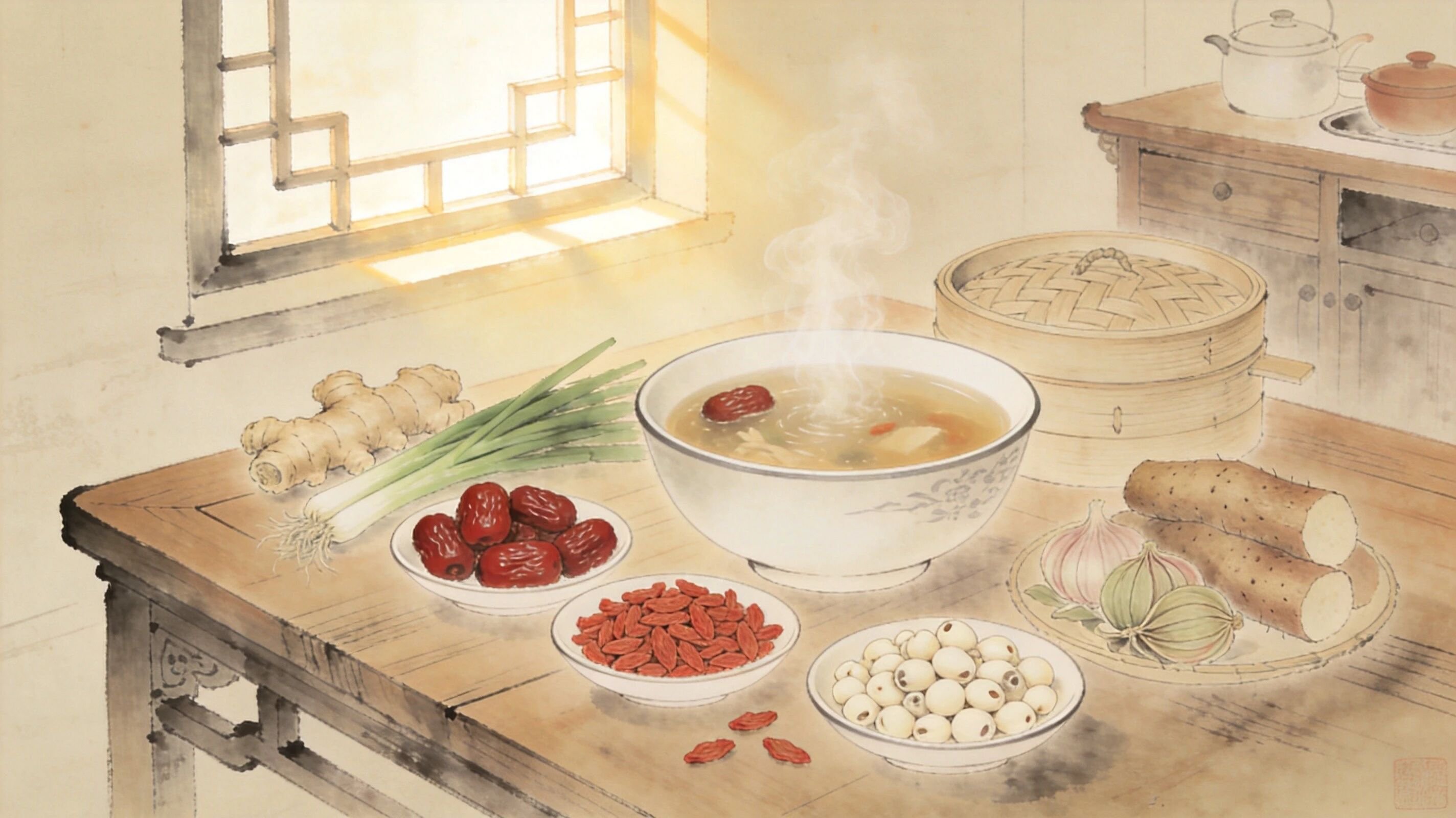
People are unique. Each person has different traits, preferences, and characteristics. The foods we consume every day also have their own "personalities." Within the discipline of Shiology, there is a field called Food Composition, which consists of two sub-disciplines: Food Elements and Food Natures. Food Composition studies the "personality" of food — the inherent properties embedded within food itself, referred to as food nature.
The world of food is incredibly diverse. Every type of food carries its own unique characteristics. These food characteristics can be broadly divided into two categories: neutral nature and biased nature.Biased-nature foods can be further classified into four types: warm, hot, cold, and cool. Together, these represent the five fundamental food natures —the core patterns of food metaproperties.
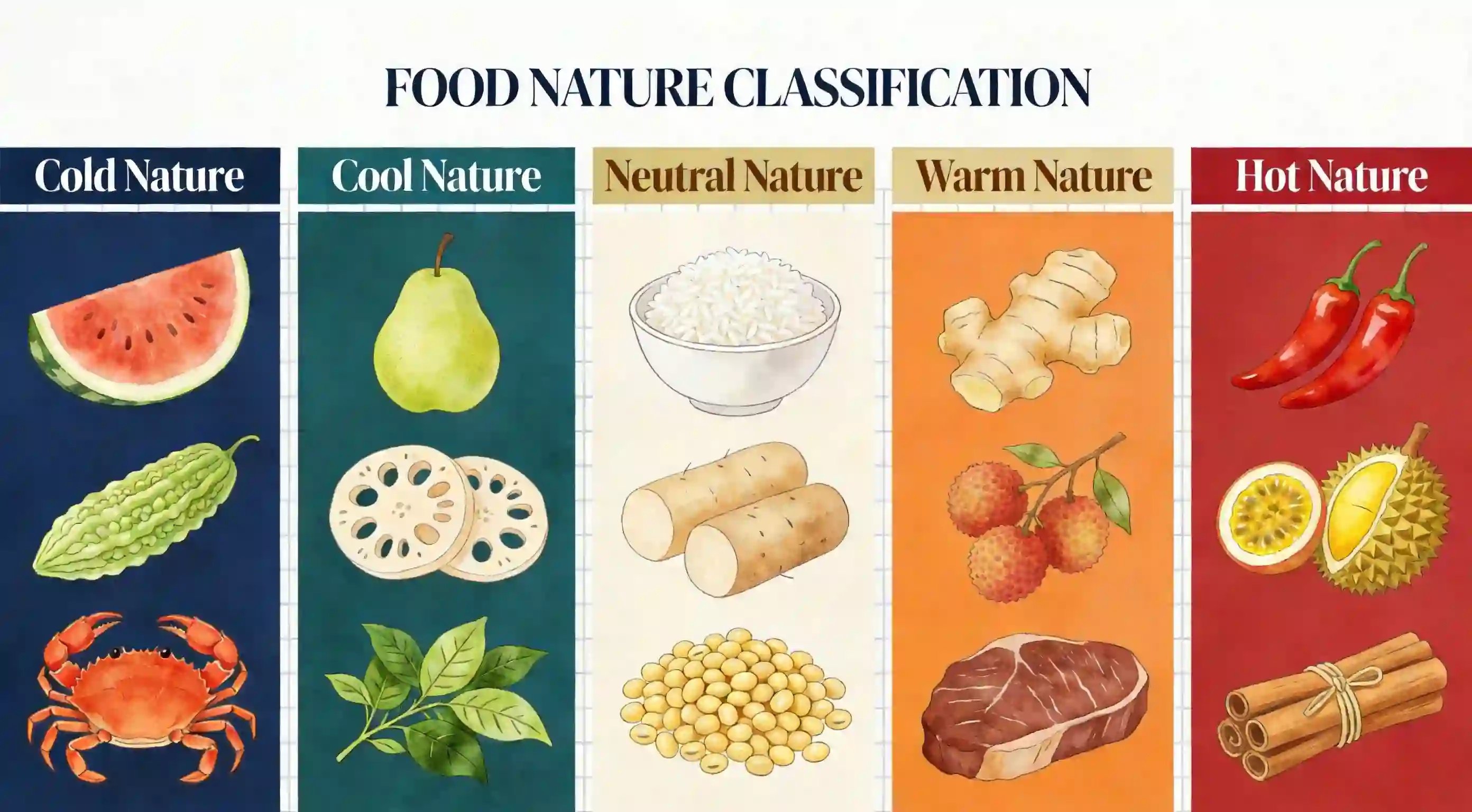
Neutral-nature foods are like people with calm and steady personalities. They are neither cold nor hot, but balanced and harmonious. Their greatest strengths are adaptability, stability, and compatibility.
Whether you have a cold-prone constitution or a heat-prone constitution, and regardless of the season, neutral-nature foods are generally suitable choices. They may not target a specific imbalance, but they quietly strengthen the body’s foundation, support vitality, nourish internal organs, and form the backbone of our daily meals.
Common neutral-nature foods include rice, millet, japonica rice, yam, potato, soybean, pork, and lotus seeds.For maintaining overall health and reducing the risk of imbalance, a fundamental principle is to include more neutral-nature foods in daily diets.
Unlike gentle and versatile neutral-nature foods, biased-nature foods have more pronounced characteristics and more targeted effects. They are divided into four categories: Warm nature,Hot nature,Cold nature and Cool nature.
These foods are not primarily used for everyday nourishment.Instead, they function as natural "regulators" that help correct bodily imbalances. When used appropriately, they may help restore balance and support health. When used improperly, they may aggravate existing imbalances.
Warm-Nature Foods Examples: ginger, chives, pumpkin, carrot, lychee, longan, cherry, chicken, beef, crucian carp, glutinous rice, and more.
Hot-Nature Foods Examples: chili pepper, Sichuan pepper, black pepper, garlic, durian, mango, mutton, dog meat, liquor, cinnamon, and more.
Cold-Nature Foods Examples: watermelon, bitter melon, water chestnut, purslane, kelp, laver, crab, river snail, mung bean, banana, and more.
Cool-Nature Foods Examples:winter melon, white radish, celery, lotus root, pear, pomelo, orange, duck meat, duck eggs, green tea, and more.
Many people believe that illness can only be treated with medicine, while food simply exists to satisfy hunger.
This view, however, overlooks an important principle in Shiology: food can support health regulation and disease prevention by utilizing the properties of food.The core idea is: The human body may develop imbalances, and foods possess different characteristics. By using appropriate food properties to correct bodily tendencies, balance can be restored through dietary regulation.
Both food natures and food elements represent human understanding of food, but they focus on different dimensions.
Compared with knowledge of food elements, the greatest value of food natures lies in their ability to help regulate bodily imbalance and support disease prevention.
Across cultures, human societies have developed knowledge of using food properties to maintain health and prevent illness. Among them, traditional Chinese dietary knowledge represents one of the most systematic and extensive applications of this concept.
Food-based health regulation is gentle and gradual. It is particularly suitable for addressing sub-health conditions, chronic imbalance, and constitutional tendencies. Its principle is: Gradually adjust, restore balance, and correct deviation.
When the body tends toward coldness, warm or hot foods may help restore balance. Signs such as frequently cold hands and feet, fatigue, and low energy may indicate excessive internal cold tendencies. Regular consumption of warm-nature foods may gradually support digestive vitality and help reduce cold-related imbalance.
When the body tends toward excessive heat, cool and cold foods may help moderate the imbalance. Symptoms such as dry mouth, irritability, poor sleep, and dry stools may reflect accumulated heat and dryness. Appropriate use of cool- and cold-nature foods may help balance internal heat and restore harmony.
For people with fluctuating conditions or weaker constitutions, neutral-nature foods may help stabilize the foundation.Rather than excessive supplementation or aggressive adjustment, a balanced diet based on neutral foods can help establish stability before further refinement.
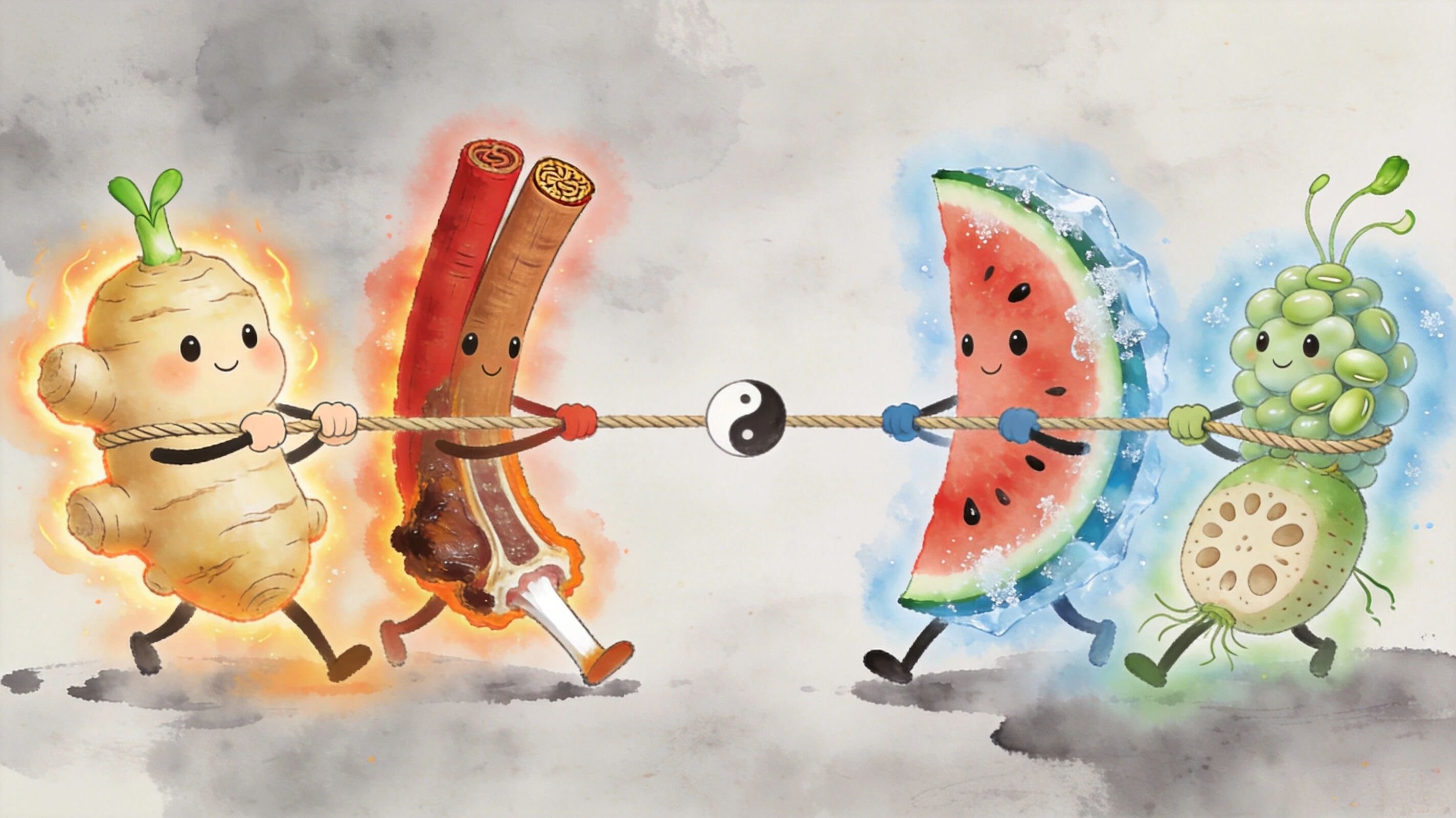
The concept of "food and medicine sharing the same origin" refers to the idea that both food and orally administered medicines enter the body through the digestive system and influence human health through biological processes. The body does not possess separate systems to completely distinguish and process them; rather, both operate through the relationship between food transformation and health maintenance.From this perspective, both food and medicine utilize the connection between dietary transformation and human health.Understanding this principle means that developing the ability to eat wisely may reduce unnecessary reliance on medicines.

Modern healthcare often falls into a delayed-response pattern: people only begin regulating their health after discomfort or illness appears. This approach focuses on treating existing diseases.
A deeper form of health wisdom is preventive regulation — identifying early signs of imbalance before disease develops and using daily dietary adjustments to correct small deviations before they become major problems.
Understanding food personalities and applying food properties appropriately provides one of the simplest and most accessible approaches to preventive health.
Many recurring minor issues are actually signals of imbalance:
These conditions may not require immediate medication or treatment. Often, they require adjustments in dietary patterns.Dietary Regulation for Different Tendencies:
For people with cold tendencies: Reduce iced drinks and excessive raw or cold foods. Choose more warm-nature foods to gradually support balance.
For people with heat tendencies: Reduce excessive spicy, fried, or overly warming foods. Choose appropriate cool-nature foods to help maintain balance.
Small adjustments made consistently through everyday meals can continuously correct bodily imbalance and prevent sub-health conditions from progressing into disease.
Treating existing diseases is a reactive approach.Preventing diseases before they occur is a proactive approach to health.
Food has different personalities.Understanding these personalities, responding to the body's needs, and making every meal appropriate, balanced, and health-supportive is one of the simplest and most sustainable paths toward lifelong health and longevity.
Contact Person: Mr Zhang E-mail: Secretariat@shiology.world