
Shiology Concept Explained——Five-Sense Aesthetics: Reconstructing the Complete Sensory Experience of Food
Many people evaluate food based on a single question: Does it taste good? As a result, a dish with a strong and stimulating flavor is often regarded as exceptional cuisine. Taste has become the dominant criterion by which people judge food experiences.
However, within the framework of Shiology, there is a fundamental principle known as Five-Sense Aesthetics. It proposes a more comprehensive understanding of eating: food appreciation is a holistic sensory experience involving the entire body. Taste, smell, touch, sight, and hearing collectively shape the aesthetic experience of eating.
The appeal of a perfectly prepared steamed fish or a slow-cooked free-range chicken, for example, never comes from taste alone. The subtle aroma of the ingredients, the freshness of the presentation, the layered texture, and even the delicate sounds produced during chewing all contribute to a complete and multidimensional food experience.
What Is Five-Sense Aesthetics?
Five-Sense Aesthetics refers to the process through which taste, smell, touch, sight, and hearing work together to create the aesthetic appreciation of food. It is one of the fundamental concepts of Shiology and is recognized as one of the ten core principles of Shiology.
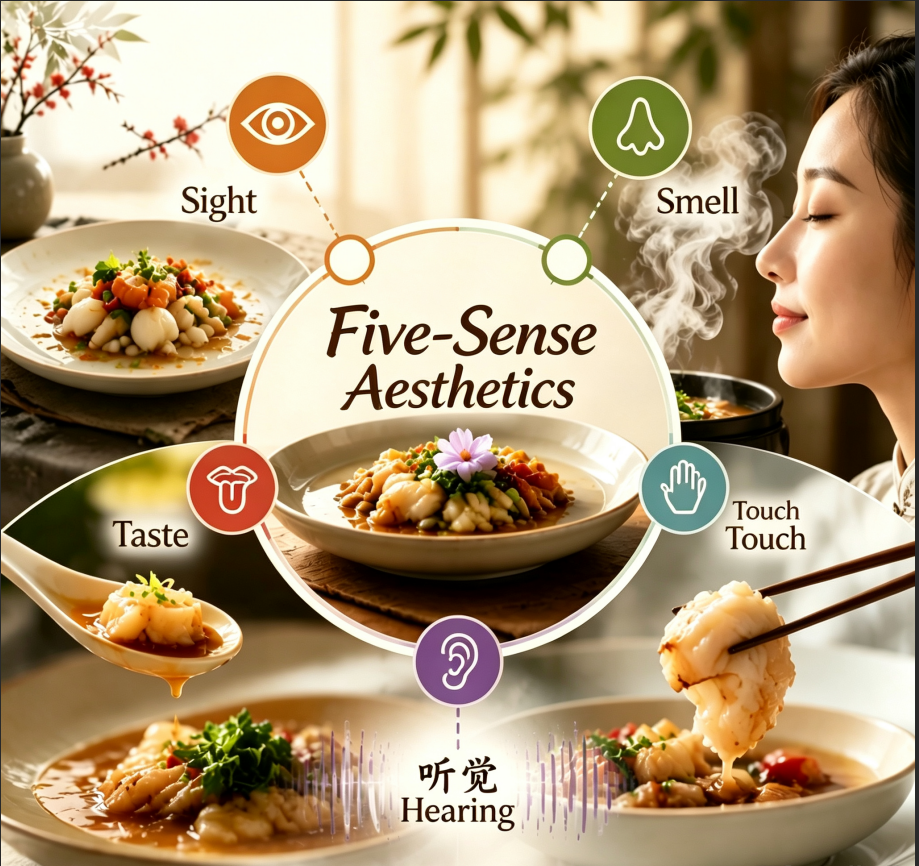
This concept challenges the limitations of traditional views that focus exclusively on taste in food evaluation or on visual and auditory elements in aesthetics. It transforms eating from a simple act of consumption into a form of sensory art.
Which Five Senses Are Involved?
Taste
The basic flavors perceived in the mouth—including sour, sweet, bitter, salty, and umami—represent the fundamental taste experience created by ingredients and seasoning.
Smell
The natural aromas of ingredients, together with the complex fragrances released through cooking processes such as steaming, boiling, roasting, and baking, form a central component of flavor perception.
Touch
The oral sensations of softness, tenderness, crispness, elasticity, and smoothness, as well as the texture experienced during chewing, shape the tactile dimension of eating.
Sight
The colors and appearance of ingredients, the selection of tableware, dining arrangements, and presentation details contribute to visual appreciation.
Hearing
The sounds associated with food—such as the crisp sound of biting, the gentle bubbling of soup, or the sizzling sound during cooking—enhance the dynamic experience of eating.
Pursuing only intense flavors, such as excessive spiciness or greasiness, often comes at the expense of aroma, visual harmony, and overall balance. From the perspective of Shiology, this represents a one-dimensional and distorted form of food aesthetics.
A truly aesthetic eating experience requires harmony among the five senses: external sensory pleasure and internal bodily comfort must be achieved together. Only when these two dimensions are unified can food achieve complete aesthetic value.
The Five-Sense Structure: A “3+2” Sensory Framework
Five-Sense Aesthetics divides sensory experiences into two categories: core and supportive elements.Taste, smell, and oral touch constitute the core sensory foundation, while sight and hearing serve as supportive sensory dimensions, forming a “3+2” structure.
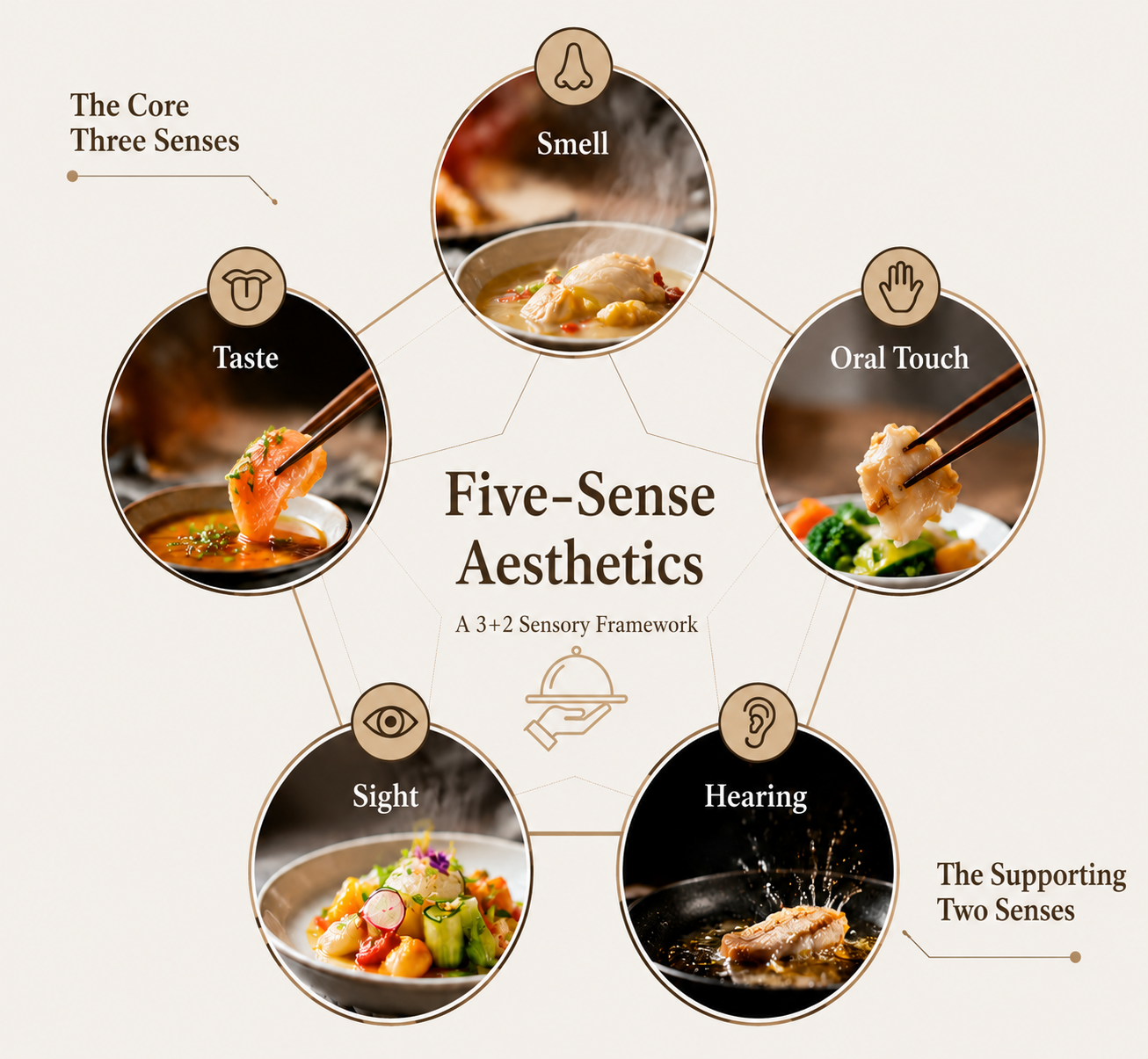
Core Sensory Elements
Taste
Taste is the first direct interaction between food and the human body. The five basic taste categories—sweet, sour, bitter, salty, and umami—form the most direct system for recognizing flavor.Five-Sense Aesthetics advocates the principle of “revealing the original taste through subtlety.” Appropriate seasoning should highlight the natural characteristics of ingredients rather than create extreme sensory stimulation through excessive salt, spice, or sweetness.
Smell
Modern studies of food perception have shown that smell plays a major role in flavor experience. Within Five-Sense Aesthetics, aroma holds an essential position because the natural fragrance of ingredients provides the foundation of refined culinary appreciation.The gentle aroma released from slow-cooked chicken, the natural sweetness of steamed pumpkin, and the refreshing fragrance of fresh fruits and vegetables demonstrate that high-quality food does not require excessive seasoning. The authentic aroma of ingredients itself can create comfort and satisfaction.
Oral Touch
The sensations of softness, tenderness, crispness, elasticity, and smoothness during chewing represent the third core sensory dimension.Excellent food emphasizes the balance of textures: soft and delicate yam paired with crisp vegetables, or tender braised meat complemented by refreshing greens. Such combinations create richer layers of chewing experience.A long-term preference for only fried crispy foods or overly soft textures can reduce sensory diversity and disrupt the balance of Five-Sense Aesthetics.
Supporting Sensory Elements
Sight
Visual aesthetics in Five-Sense Aesthetics encompass more than the shape and color of food. They also include the use of food carving and decoration, the choice of serving vessels, and the overall presentation of a meal.
At the same time, Five-Sense Aesthetics places greater emphasis on the natural colors of ingredients, simple tableware, and a clean and orderly dining environment.
Hearing
Hearing is perhaps the least familiar dimension of food aesthetics for most people. Yet the sounds produced during cooking and eating are also part of the art of food.The sizzle of ingredients hitting hot oil, the crisp crackle of biting into a crunchy food, and the gentle bubbling of a clear soup can all enrich the sensory experience of eating.The "3+2" structure of Five-Sense Aesthetics is not an arbitrary classification; it reflects the different roles played by the five senses in food appreciation.
Consider this: a person who is blind can still appreciate food through the other four senses. A person who is deaf can likewise experience the beauty of food without hearing. But without smell, the aroma of a meal is greatly diminished; without taste, food loses its fundamental flavor experience; and without oral touch, it becomes difficult to distinguish textures such as crispness, tenderness, and softness.
For this reason, taste, smell, and oral touch form the foundation and core of food aesthetics, while sight and hearing play supportive roles.It is through this sensory structure that the deeper aesthetic qualities of food can be fully appreciated.
The Dual Response of Eating Aesthetics
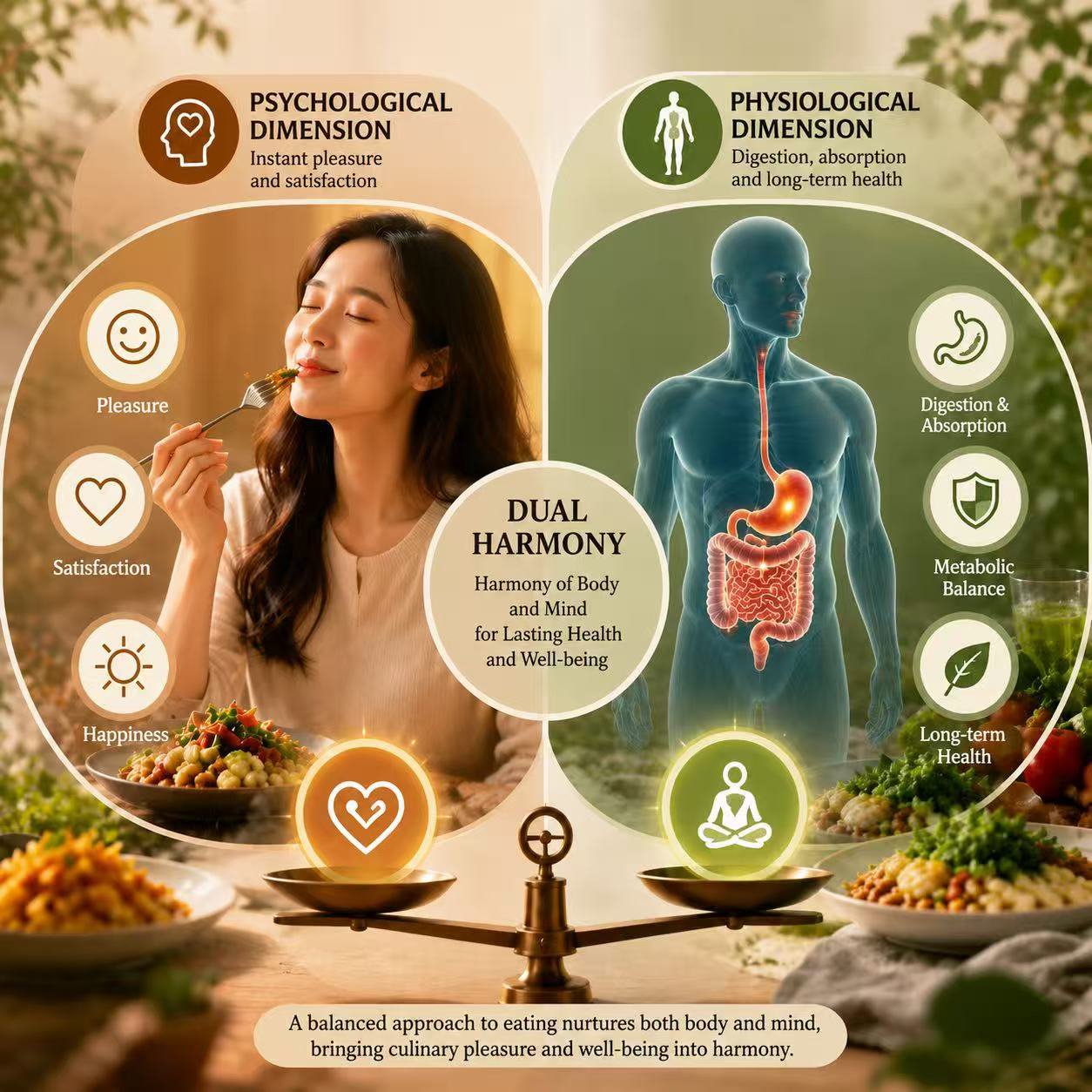
Shiology proposes that food aesthetics has a dual structure, operating simultaneously at psychological and physiological levels.Psychological dimension: Immediate pleasure, satisfaction, and emotional responses.Physiological dimension: Digestion and absorption, metabolic burden, and long-term health outcomes.
In everyday life, some eating behaviors place excessive emphasis on immediate psychological gratification while overlooking their longer-term physiological consequences. This can create a structural imbalance of “short-term pleasure and long-term burden.”
From the perspective of Shiology, such an imbalance is an important underlying factor in the growing prevalence of diet-related chronic health problems.Therefore, a truly complete aesthetic experience of eating should not focus solely on the richness and intensity of sensory stimulation. It should also take into account the body's capacity to receive, process, and respond to food.The ultimate goal is to achieve harmony between psychological pleasure and physiological well-being.
A truly accomplished eater is therefore one who understands and respects both dimensions of the eating experience—appreciating food not only for the pleasure it provides, but also for the way it interacts with the well-being of the body.
Conclusion
We often instinctively think of good food as nothing more than a celebration on the palate. Yet, as Five-Sense Aesthetics reveals, eating is a much richer experience.It is a comprehensive aesthetic activity in which taste, smell, and oral touch serve as the three core senses, complemented by sight and hearing as two supporting senses. A complete food experience seeks to satisfy both body and mind, bringing together culinary pleasure and well-being.There is no need to pursue extreme or overpowering flavors.
Learning to appreciate the aroma of ingredients, the layers of texture, the atmosphere of the dining environment, and the body's sensations after eating allows us to recognize the deeper balance created by the interaction of the five senses.To truly understand food is to understand this balance—and to eat in a way that supports lasting ease, enjoyment, and well-being.
Contact Person: Mr Zhang E-mail: Secretariat@shiology.world